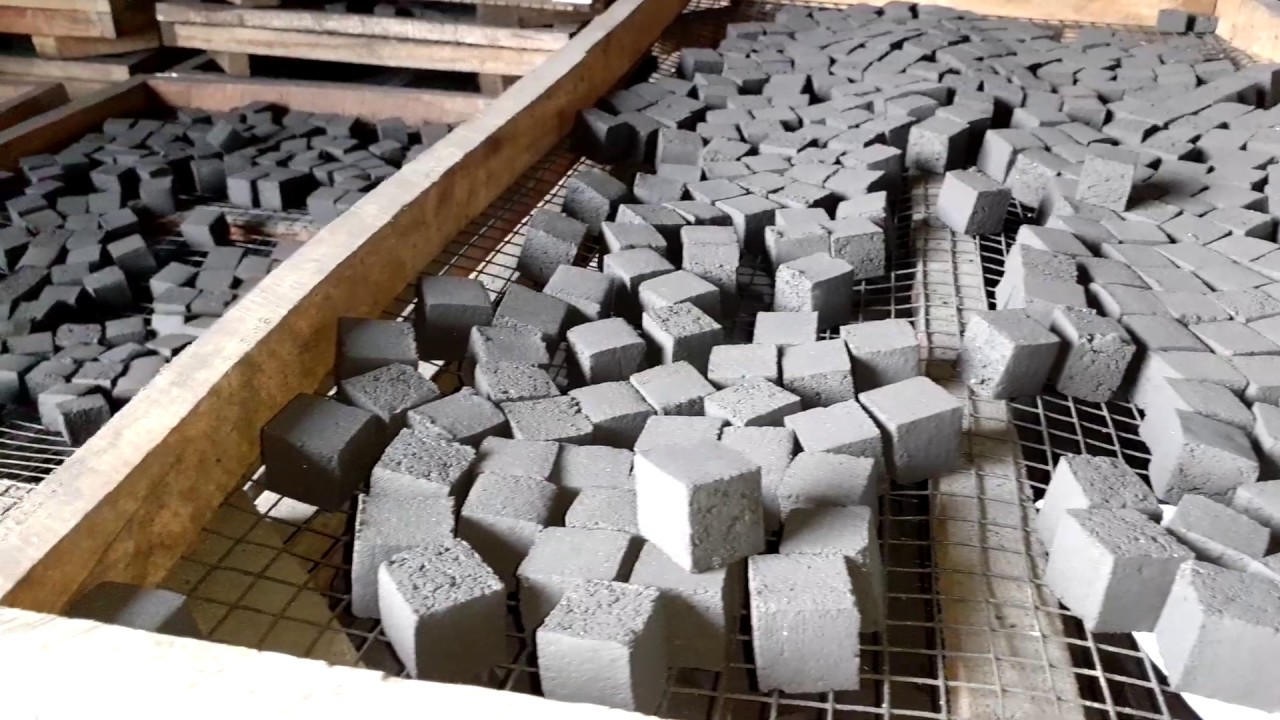
Coconut charcoal briquette Indonesia – Briquettes are an energy source obtained from biomass that is utilized in the same way as petroleum and energy derived from fossils are. Briquettes may be manufactured from a variety of raw materials found in our daily lives, such as coconut husks, rice husks, charcoal, sawdust, maize cobs, leaves, and so on.
Briquettes are made by pressing or compacting the process, which attempts to improve the calorific value per unit area of biomass to be utilized as alternative energy, allowing for substantial amounts of energy to be generated with very little biomass.
Coconut husks or coconut husks, which are now used to make charcoal briquettes, are frequently thrown. In reality, coconut shells may be utilized as raw materials to make charcoal, which can then be turned into novel value-added goods.
The Potential Export of Coconut Charcoal Briquette Indonesia
Coconut shell charcoal briquettes from Indonesia have a high export potential. One aspect is the high quality of Indonesian coconut charcoal briquettes, which are regarded as the best on the international market. CCharcoal from Coconut Briquettes are a popular alternative fuel for cooking, particularly grilling., e.g., B. in Europe, in Middle Eastern nations for shisha cigarettes, and in Asia, e.g., for steamed rice. Coconut shell charcoal, for example, is utilized in South Korea and Japan, whereas briquettes are used in Indonesia.
Coconut shell charcoal briquettes from Indonesia can provide more heat than mangrove charcoal or charcoal briquettes. Furthermore, coconut shell charcoal briquettes are safer and more ecologically beneficial because they do not harm vegetation like mangroves or emit smoke. Furthermore, it is related to the extremely sensitive problem of global warming.
Coconut briquettes are commonly used in the kitchen. People typically utilize these briquettes to cook a variety of cuisines that need a pre-burning procedure, such as barbecue, steak, or grilled satay. These briquettes are commonly used in Middle Eastern nations to smoke “sisha,” a form of cigarette smoked using a device with numerous tastes. If you are still unsure, you can conduct your own research.
Various Uses of Coconut Charcoal Briquette Indonesia
Also, charcoal briquettes are extensively used to burn house perfumes in Middle Eastern nations. Coconut shell charcoal briquettes are commonly used for heating and heating spas throughout Europe and North America. Yet, it is also frequently used to burn cookware during the cooking process. The calorific value of various briquette varieties. It can be seen that charcoal briquettes have the highest calorific value, which is about 6058.62 cal/g, while rice husk briquettes have the lowest calorific value, which is approximately 3072.76 cal/g.
Meanwhile, coconut charcoal briquette Indonesia have a high calorific value of roughly 5,780 cal/g and teak sawdust briquettes have a calorific value of 5,478.99 cal/g. The high calorific value improves combustion efficiency and reduces the need for briquettes.
With a large export market opportunity, demand for coconut shell raw materials will rise. Small and medium-sized businesses should take advantage of this chance to use coconut shells. Coconut charcoal briquettes are the sole market where demand outnumbers supply, implying that many needs cannot be satisfied owing to a scarcity of raw resources.
To avoid a scarcity and secure the supply of raw materials for coconut shells in the future, there will be a need to offer processed products in order to give more value and assure the products’ sustainability. Indonesia’s long-term natural resources. Hopefully, the Covid-19 epidemic that is presently sweeping the world will not discourage Indonesian firms’ eagerness to enter the export market.
Maybe you like to read the following article Use of Coconut Coir Geotextile to Control Erosion of Sloping Soil